
News
How every second mattered in Princess Diana’s final hours. The 40 minutes that changed everything

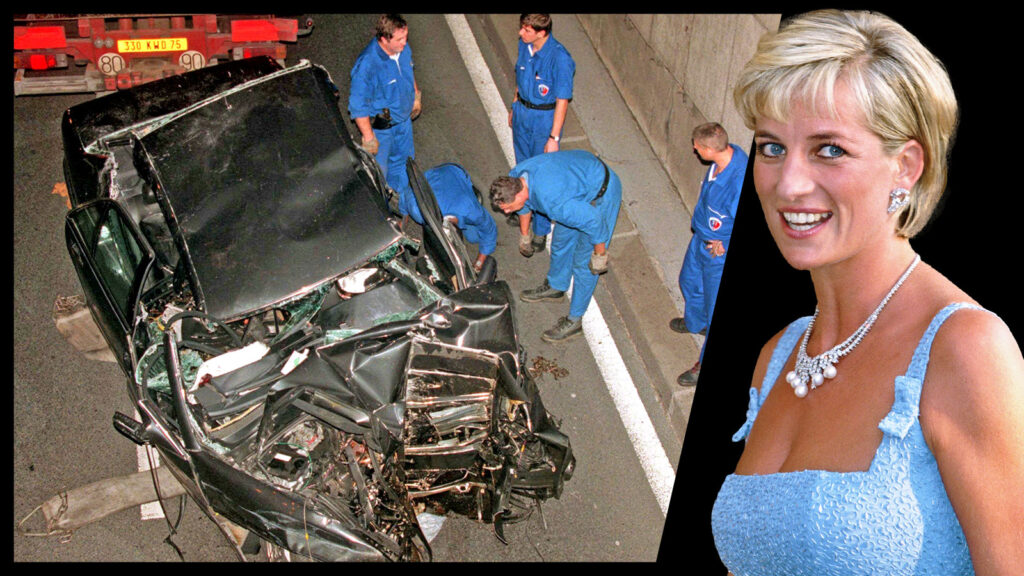
It took 40 minutes for Diana to reach the hospital after the crash. Doctors later said those 40 minutes may have cost her her life.
The Pont de l’Alma tunnel is approximately 3.8 kilometres from Pitié-Salpêtrière Hospital, where Diana was eventually taken. In a city with functioning emergency infrastructure, that journey should take minutes.
Diana did not arrive at the hospital until 2:06 AM — approximately 40 minutes after the crash, which occurred at around 12:23 AM.
The delay has two explanations, both of which have been examined in detail by the French judicial investigation and the British inquest that followed.
The first is the condition of the scene. The crash was severe. Diana was trapped in the wreckage. Extracting her required time and care, and the emergency responders on site — the SAMU, France’s mobile emergency medical service — operated under a protocol that prioritized on-site stabilization over rapid transport. The French medical approach, known as “stay and play,” involved treating the patient at the scene before moving them, in contrast to the British “scoop and run” approach that prioritizes speed of transport to hospital.
The second explanation involves a decision made during the journey. The ambulance carrying Diana stopped for approximately 10 minutes near the Quai de la Rapée, approximately a kilometre from the hospital. The medical team had detected a severe drop in blood pressure — Diana had gone into cardiac arrest — and stopped to attempt resuscitation.
But beyond these two explanations lies a deeper question — not just what happened, but whether anything could have been done differently in those critical moments. The timeline, when examined minute by minute, reveals a sequence of decisions shaped by training, protocol, and the visible condition of the patient at the scene.
When emergency responders first reached Diana, she was conscious but in extreme distress. Witnesses later described her as speaking, asking questions, unaware of the full extent of her internal injuries. This detail would later become central to the debate — because it suggested that, at least initially, she was alive and responsive. However, trauma specialists note that severe internal bleeding can be deceptively silent in its early stages, with patients deteriorating rapidly without obvious external signs.
The torn pulmonary vein — the injury that ultimately caused her death — is one of the most difficult traumatic injuries to manage. It leads to rapid internal bleeding into the chest cavity, reducing blood flow to the heart and brain. Even in optimal conditions, survival rates are extremely low. Surgical repair is complex and time-sensitive, requiring immediate access to a fully equipped operating theatre.
This is where the debate intensifies. Critics of the French approach argue that every minute spent at the scene reduced the already narrow window for survival. They point to the relatively short distance to the hospital and question whether a faster departure could have placed Diana in surgery earlier, before her condition deteriorated beyond recovery.
Supporters of the French medical team, however, argue the opposite. They maintain that moving a critically unstable patient too quickly can trigger sudden cardiac arrest — exactly what the “stay and play” method is designed to prevent. From their perspective, the priority was to stabilize Diana’s vital signs enough to survive the transport itself.
The 10-minute stop during the ambulance journey remains one of the most scrutinized moments. By that point, Diana’s condition had worsened dramatically. The decision to stop was not routine — it was an emergency response to a collapsing patient. Doctors attempted to restore her heartbeat before continuing, effectively turning the ambulance into a mobile resuscitation unit.
By the time Diana reached the hospital, the situation had become critical. She was in cardiac arrest. A surgical team was already waiting. She was rushed into the operating theatre, where doctors performed an emergency thoracotomy — opening her chest in an attempt to control the bleeding and repair the damaged vein. Her heart was briefly restarted, offering a moment of hope. But the damage was too severe.
At 4:00 AM, after hours of effort, she was pronounced dead.
In the years that followed, investigations in both France and the United Kingdom examined every aspect of the response — the timing, the decisions, the medical protocols. No single conclusion fully settled the question of whether those 40 minutes changed the outcome. Instead, they revealed a more complex reality: a convergence of catastrophic injury, medical judgment, and the limits of emergency care.
Whether she would have survived with different treatment — faster transport, a different protocol, arrival at hospital twenty minutes earlier — remains uncertain. Some experts believe there was a narrow chance. Others insist there was none.
The 40 minutes between tunnel and hospital remain one of the most debated dimensions of a death that has been debated in almost every dimension possible — a stretch of time where every second has been analyzed, questioned, and remembered, yet never fully resolved.


El príncipe William comparte una emotiva actualización sobre la recuperación de Kate Middleton: “Nuestra familia no podría salir adelante sin ella”

El rey Felipe habla por primera vez de uno de los talentos desconocidos de la princesa Leonor: “¿Sabes que a ella también le gusta mucho?”

The truth about Selena And Benny’s divorce rumors

Princess Diana’s surprising prediction about Camilla comes true as Queen earns ‘widespread approval’

Why there’s ‘tension’ between Kate Middleton’s parents and Charles and Camilla
